Space Pharma: Why Medicine Is Heading Beyond Earth

When people imagine space, they think of roaring rockets, astronauts drifting silently above the earth, images of distant planets and galaxies or worlds light-years away. Space feels distant, extreme, and almost unreal far removed from hospital corridors, prescription bottles, and everyday healthcare. Yet, unexpectedly, some of the most promising breakthroughs in medicine are no longer happening only on Earth. They are unfolding hundreds of miles above it.
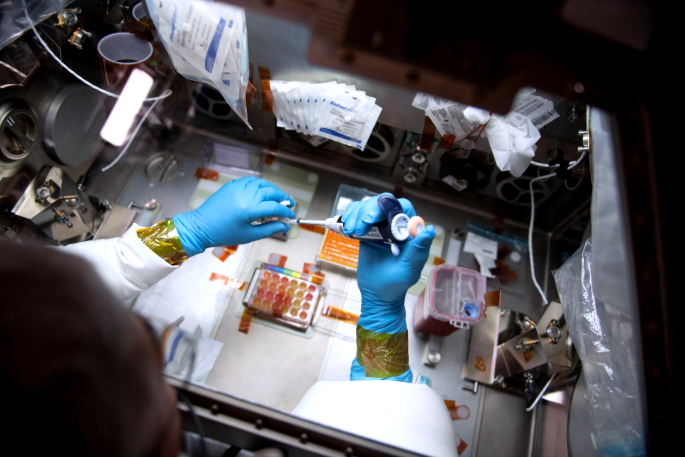
For decades, space was seen mainly as a place to explore the universe. But as scientists spent more time in orbit, they began to notice something extraordinary, space offers conditions that cannot be recreated in even the most advanced laboratories on earth. Platforms like the International Space Station opened the door not just to astronomy and physics, but to a new kind of medical research. Slowly and quietly, space began to reveal itself as a powerful environment for understanding disease and rethinking how medicines are discovered, tested, and produced. This emerging field is known as space pharma.
At the heart of space pharma is a simple but transformative idea. In space , where gravity is almost absent, a state known as microgravity life behaves differently. Molecules move in new ways, cells grow differently, and proteins take on clearer, more precise forms. These changes give scientists an unprecedented view into the building blocks of disease and treatment. The mission is not to move healthcare into space, but to use space as a laboratory to bring better, safer, and more effective medicines back to earth, reshaping the future of healthcare for everyone.
One May Ask, So What Makes Space Different?
On Earth, gravity is a constant force that shapes how everything behaves, from the way water flows to how solid materials form and settle. Liquids naturally sink or rise depending on their density, particles fall to the bottom, and most physical and chemical processes follow patterns that scientists have learned to predict and control. While this stability is useful, it also creates limitations, especially when working with delicate biological materials used in medicine.
In space, particularly aboard the International Space Station (ISS), gravity is almost completely absent. This condition, known as microgravity, creates an environment where many of the rules we take for granted on Earth no longer apply. Without gravity pulling materials downward, liquids float freely instead of settling, and particles remain suspended rather than sinking. This allows scientists to observe behaviors that are impossible to study accurately on Earth.
One of the most important effects of microgravity is how it allows crystals, especially protein crystals used in medicine to grow more evenly and with fewer defects. On Earth, gravity can distort crystal formation, leading to irregular structures. In space, crystals can form slowly and uniformly, producing much clearer results for researchers. Similarly, human cells behave differently in microgravity, changing how they grow, communicate, and respond to their environment.
While these differences may seem small at first glance, they have a powerful impact on medical research. By removing gravity from the equation, scientists gain a clearer view of biological processes, helping them design better drugs, understand diseases more deeply, and develop treatments that may be more effective for patients back on Earth.
Why Drug Development Is So Difficult on Earth
Creating a new medicine is a long and complex process that often takes many years and costs enormous amounts of money. Even with advanced technology, there is no guarantee that a promising idea will turn into a safe and effective treatment. One of the biggest challenges scientists face is understanding exactly how a drug behaves once it enters the human body, right down to the smallest molecular interactions.
Many modern medicines are built around proteins, which are tiny biological machines that carry out essential functions in the body. For a protein-based drug to work properly, its shape must be just right. Even small distortions can affect how well it works or whether it works at all. To design better medicines, scientists need to study these proteins in great detail and see how potential drugs attach to them.
On Earth, this is harder than it sounds. Researchers rely on growing protein crystals to examine their structure, but gravity often interferes with this process. As crystals form, gravity can cause them to grow unevenly or develop flaws. These imperfect crystals produce blurred or incomplete data, making it harder for scientists to fully understand how a drug will interact with the body. As a result, the drug discovery process becomes slower, more expensive, and less predictable.
How Space Helps Make Better Medicines
In the microgravity environment of space, proteins are able to form crystals that are far more uniform and well-structured than those grown on Earth. Without gravity pulling materials downward or causing uneven movement in liquids, protein molecules can come together slowly and naturally. This results in crystals that are clearer, more stable, and closer to their true shape. For scientists, this difference is critical.
These high-quality protein crystals allow researchers to study molecular structures in much greater detail. With a clearer and more accurate picture, scientists can see exactly how a protein is shaped and where a drug molecule might attach to it. This detailed understanding makes it possible to design medicines that bind more precisely to their targets, rather than affecting multiple parts of the body. As a result, drugs can be made to work more effectively while reducing unwanted side effects.
This space-based approach is not just theoretical. It has already been used to improve research into treatments for serious and widespread conditions, including cancer, diabetes, and neurological disorders. By using space as a laboratory, scientists are gaining insights that are difficult or impossible to obtain on Earth, helping to speed up drug discovery and improve the quality of future medicines for patients worldwide.
Space and Human Health Research
Space research does more than support the development of better medicines, it also provides a unique window into how the human body changes over time. When astronauts live in space for extended periods, their bodies respond quickly to the absence of gravity. These changes happen much faster than they would on Earth, allowing scientists to observe physical decline and adaptation within months instead of years.
In a microgravity environment, astronauts experience significant bone loss, similar to what people with osteoporosis face later in life. Their muscles also weaken because they no longer have to work against gravity to support the body. In addition, space travel affects the immune system, sometimes making astronauts more vulnerable to illness, and it can disrupt sleep patterns and metabolism due to changes in day-night cycles and physical activity levels.
By closely studying these effects, researchers gain valuable insights into conditions that affect millions of people on Earth, particularly older adults. Space effectively acts like a fast-forward button for certain health conditions, allowing scientists to study disease progression and potential treatments more rapidly than would be possible in normal Earth-based studies. This knowledge helps improve prevention strategies, therapies, and long-term care for age-related and chronic conditions back on Earth.
Manufacturing Medicine in Space
Beyond research and discovery, space also opens the door to a new way of manufacturing medicines. One of the most exciting ideas in space pharma is the possibility of producing certain drugs in space rather than on Earth. While this may sound like science fiction, it is rooted in real scientific advantages offered by the space environment.
Some medicines, especially complex biological drugs such as proteins and other living-cell–based treatments, are difficult to manufacture consistently on Earth. Gravity can interfere with how these materials mix, grow, or settle during production, sometimes leading to variations in quality. In microgravity, these processes can happen more evenly and with fewer disturbances, potentially allowing for cleaner, more uniform drug production.
Looking ahead, scientists are exploring whether high-value medicines could be manufactured in orbit and then safely returned to Earth for patient use. Although this approach is still in its early stages, initial experiments have already begun and have shown promising results. As space technology becomes more affordable and accessible, manufacturing medicine in space may move from an experimental idea to a practical solution for producing advanced therapies.
What Does This Mean for Everyday People?
Space pharma is not about creating medicines exclusively for astronauts or solving health problems that only occur in space. Its true importance lies in how it can improve healthcare for people on earth. By using space as a research and development environment, scientists are finding new ways to understand diseases and create better treatments that can benefit patients everywhere.
One of the most promising outcomes is the potential for better cancer treatments. Clearer insights into how drugs interact with the body can lead to therapies that target cancer cells more precisely while reducing damage to healthy tissue. Space-based research may also improve insulin and hormone therapies, making them more effective and more consistent for people who rely on them every day. In addition, the ability to study biological processes more clearly could significantly speed up drug discovery, helping new treatments reach patients faster than traditional methods allow.
Space pharma also holds promise for developing new treatments for age-related diseases such as osteoporosis, muscle loss, and neurological conditions. As launch costs continue to decrease and access to space-based research platforms expands, the insights gained from space pharma are likely to move more quickly from the laboratory to the clinic. What once seemed distant and futuristic could soon have a direct and meaningful impact on everyday healthcare.
Challenges Still Ahead
Despite its enormous potential, space pharma is not without significant challenges. Conducting research and manufacturing in space remains expensive, as launching experiments, equipment, and personnel beyond earth requires substantial resources. Access to space-based laboratories such as the International Space Station is also limited, meaning that only a small number of experiments can be carried out at any given time. This makes space research highly competitive and carefully regulated.
In addition to cost and access, there are important questions around safety, regulation, and scale. Medicines developed or manufactured in space must meet the same strict standards as those produced on earth, if not higher. Scientists and regulators must ensure that space-based processes are safe, reliable, and capable of being scaled up to serve large populations. These challenges will take time, collaboration, and careful planning to overcome.
However, history offers an encouraging perspective. Many technologies that were once developed solely for space exploration such as GPS navigation, satellite communication, and advanced materials have gone on to transform everyday life on earth. Space pharma may follow a similar path. While it is still an emerging field, its long-term impact on medicine and healthcare could be just as far-reaching.
Conclusion
Space pharma stands at a remarkable intersection of human curiosity, scientific progress, and the universal need for better health. It challenges long-held assumptions about where medical breakthroughs can happen, reminding us that innovation does not always move forward in straight lines. Sometimes, the path to solving earth’s most complex health challenges requires us to look upward and venture beyond familiar boundaries.
As humanity pushes deeper into space, medicine is not merely coming along for the ride, it is evolving, learning, and returning with new possibilities. The knowledge gained in orbit is not meant for distant worlds, but for people here on earth: patients waiting for more effective treatments, families hoping for longer and healthier lives, and healthcare systems striving to do more with less. From sharper drug design to faster discovery and new approaches to age-related and chronic diseases, space pharma offers a glimpse of a future where medical progress accelerates rather than stalls.
What once belonged to the realm of science fiction is now shaping real-world healthcare. By embracing space as a laboratory, we are redefining what is possible in medicine. In reaching beyond our planet, we may ultimately find the tools to care for it and ourselves better than ever before.