Why I Believe South Africa's Healthcare System Must Be Built on Blockchain

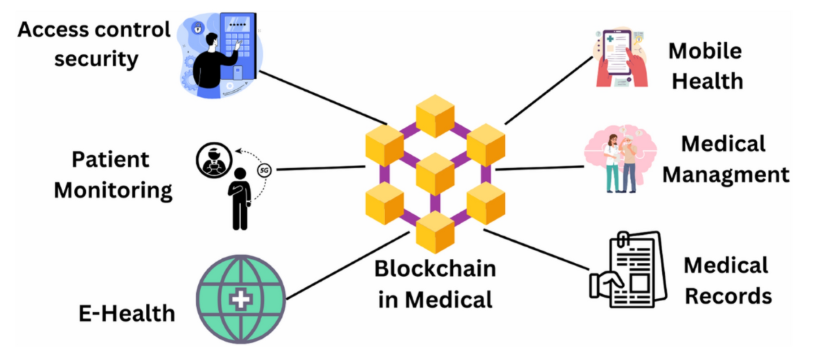
I've spent years working at the intersection of healthcare and technology in South Africa, and one thing has become painfully clear to me: most of our healthcare challenges are not caused by a lack of doctors, nurses, or medicine. They are caused by broken systems.
We lose patient files. Medical histories don't follow patients. Doctors are forced to make decisions without full information. Fake medicines find their way into legitimate supply chains. And sensitive health data is stored in ways that make it vulnerable to breaches.
These are not abstract problems. They cost time, money, and lives.
That is why I believe South Africa's healthcare system must move toward a blockchain-based foundation not as a buzzword, but as a practical tool fix what is clearly not working. At Siza, we started with one simple question: Why should a patient's medical history disappear just because they change clinics, provinces, or doctor's? In a country where people are highly mobile and healthcare access is uneven, this makes no sense. Patients should not be punished by the system for simply moving through life.
Through Siza's telemedicine platform, we are already addressing part of this problem. With patient permission, medical histories can be securely accessed wherever care is provided. Doctors are able to see a patient's full medical journey, not just what happened at the last visit. There is no waiting for physical files, no relying on memory, and no guesswork. This alone improves the quality and safety of care.
Blockchain strengthens this model by ensuring that those medical records cannot be altered, duplicated, or accessed without consent. It introduces trust where trust has historically been fragile.
One of the most dangerous weaknesses in our healthcare system is the fragmentation of medical records. Today, patient information lives in silos paper files in clinics, separate hospital systems, lab databases, pharmacy records, and medical aid/insurance platforms that do not speak to one another. The result is duplication, errors, and missed information. Blockchain makes it possible to create a single, secure, patient-controlled health record that is updated by authorised healthcare providers and remains consistent wherever the patient goes.
Another issue that deeply concerns me is counterfeit medicine. Fake and substandard drugs are a silent killer across Africa. They look legitimate, move through real supply chains, and reach patients who trust the system to protect them. Blockchain allows medicines to be tracked and traced from manufacturer to patient. Every step is recorded, verified, and immutable. If a medicine did not come through an approved source, it becomes visible immediately. This is how we move from reacting to harm, to preventing it.
Data privacy is often raised as a concern when people hear about digital health systems. It's a valid concern. What many don't realise is that blockchain actually improves privacy when designed correctly. There is a clear separation between metadata and health data. Metadata shows that a record exists and that is was accessed, without revealing medical details. The health data itself remains encrypted and accessible only with patient consent. Every access leaves a permanent audit trail. Silent abuse of data becomes extremely difficult.
This is fundamentally different from traditional cloud-based systems, which rely on central servers. Centralised systems create single points of failure. When they are hacked, millions of records can be exposed at once, and entire hospitals or clinics can be taken offline. Blockchain distributes data across a network, removing the central target. Records cannot be secretly changed or deleted, and systems continue functioning even if part of the network goes down. For healthcare, this level of resilience is not a luxury, it is a necessity.
At its core, healthcare runs on trust. Patients must trust that their records are accurate, that their medicines are real, and that their personal information will not be misused. Blockchain reduces the need for blind trust by replacing it with verifiable truth. Every action is recorded, time-stamped, and accountable.
I don’t believe blockchain is a silver bullet. It will not fix every problem in South African healthcare. But it directly addresses some of the most dangerous and persistent failures in the system, failures that technology like Siza is already working to overcome.
South Africa does not need a perfect healthcare system. It needs one that works better today than it did yesterday, and one that puts patients back at the centre. If we are serious about improving access, safety, and trust in healthcare, then blockchain should not be a future conversation. It should be a present one.
At Siza, we are building toward that future responsibly, securely, and always with the patient first.